




Choosing a kids lunch box usually comes down to one question: stainless steel or plastic? Both can be great – it depends on your child's age, what you pack and how rough the school bag gets. Here's an honest side-by-side.
Stainless steel lunch boxes: pros and cons
Pros
- Plastic-free – food-grade 304 (18/8) stainless steel has no BPA and doesn't absorb smells or stains.
- Very durable – survives drops, school bags and years of daily use.
- Easy to clean – fixed compartments with no hidden corners; most are dishwasher safe.
- Can be engraved – a laser-engraved name won't peel or wash off.
Cons
- Heavier than plastic.
- Not microwave safe.
- Usually leak-resistant rather than fully leakproof – fine for yoghurt and dips, not for soup or juice.
BPA-free plastic (Tritan) lunch boxes: pros and cons
Pros
- Lightweight – great for little ones in kindy and prep.
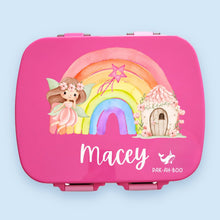
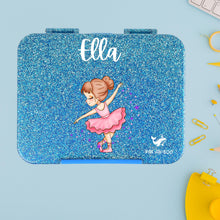
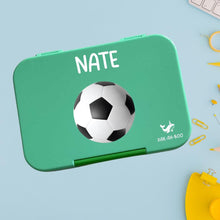
- Fun designs – bright colours and prints kids get excited about.
- Flexible layouts – many trays offer 4 or 6 compartment options.
- Often a lower price point.
Cons
- Can stain (think tomato sauce) and scratch over time.
- Generally doesn't last as long as steel.
Quick comparison
| Stainless steel | BPA-free plastic | |
|---|---|---|
| Weight | Heavier | Light |
| Durability | Excellent | Good |
| Staining | Resists stains | Can stain |
| Plastic-free | Yes | No (BPA-free) |
| Best for | Primary school, big appetites, long-term use | Toddlers, kindy, fun designs |
Which should you choose?
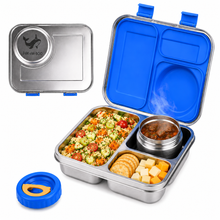
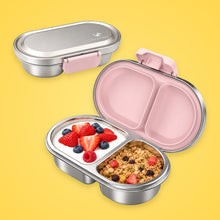
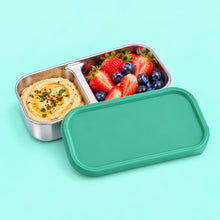
- For a long-lasting, plastic-free school lunch box: go stainless steel. Our MunchiiBox 4 stainless steel bento box (Pink) and MunchiiBox 4 (Blue) have 4 fixed compartments (830 ml) and a free name.
- For hot lunches: the ThermoBox stainless steel lunch box with thermos food jar.
- For recess and kindy snacks: the MunchiiBox stainless steel snack box (400 ml, 2 compartments).
- For little hands and fun prints: our Funbox personalised kids bento box with a BPA-free Tritan tray.
FAQs
Is a stainless steel lunch box safe for kids?
Yes – food-grade 304 (18/8) stainless steel is widely used for food storage and is BPA-free.
Can stainless steel lunch boxes go in the dishwasher?
Most can. Hand washing silicone seals and printed lids helps them last longer.
Are stainless steel lunch boxes leakproof?
Most are leak-resistant: they hold yoghurt, dips and saucy food, but runny liquids belong in a sealed food jar or drink bottle.